
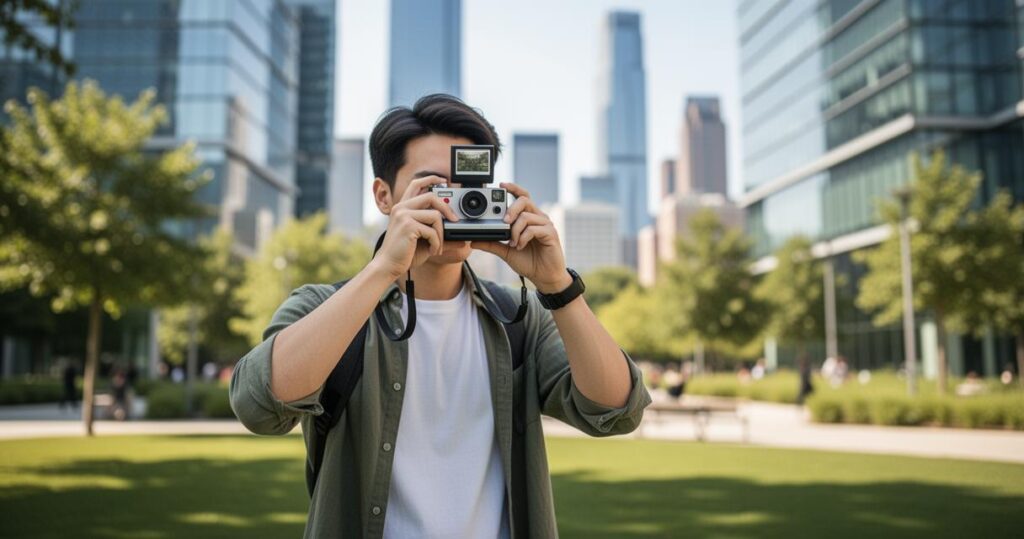
Instant photography has made a remarkable comeback, blending nostalgic charm with modern convenience. The Fujifilm Instax SQ6 sits at the heart of this revival, offering a square format that appeals to both seasoned analogue enthusiasts and newcomers curious about physical prints. Once you have put this compact device through its paces, the natural next question becomes: how do you display those prints in a way that does them justice?
Key points
- The Fujifilm Instax SQ6’s square format provides a balanced geometry that simplifies composition and makes creating wall displays aesthetically consistent.
- Successful wall displays begin with a curation process, selecting images with strong light quality, sharp detail, and compelling compositions.
- Creating geometric grids using adhesive strips or rotating prints into diamond patterns offers a modern, symmetrical way to showcase instant photos on a budget.
- For a bohemian look, suspending prints with wooden pegs on twine combined with fairy lights creates a warm, flexible, and non-permanent display.
- Investing in frames with UV-protective glazing is recommended for preserving special prints, as it protects them from light-induced fading and physical damage.
- Using dynamic display boards like corkboards or pegboards allows for easy rotation of prints, keeping collections fresh and reflective of current memories.
Unlocking the Potential of Square Format Instant Prints
Why the square layout enhances your visual storytelling
The square format has long held a special place in photography, evoking the era of classic medium-format film cameras and the iconic aesthetic associated with vintage instant prints. When you hold a freshly developed Fujifilm Instax SQ6 print, you immediately notice how the equal proportions invite the eye to settle naturally on the subject, without the tension of deciding where a horizontal or vertical frame begins and ends. This balanced geometry makes square prints particularly forgiving when composing spontaneous shots at gatherings, on holidays, or during quiet moments at home.
Beyond composition, the square layout lends itself beautifully to grid arrangements on a wall. Because each print shares identical dimensions, aligning them into a cohesive pattern requires minimal effort, yet the visual result feels deliberately considered. Whether you favour a clean, minimal aesthetic or a warm, layered look, the square format provides a versatile foundation. The instant photo thus becomes more than a memento — it transforms into a building block of interior design.
Selecting Your Best Shots from the Nomadic Camera Test
During any serious FUJIFILM INSTAX SQ6 TEST: A square format that fits in your pocket, one of the most practical revelations is how the camera’s portable, nomadic character encourages candid, spontaneous shooting. Because the device is genuinely pocketable, you tend to carry it everywhere, which means your film roll captures a far wider variety of moments than a bulkier camera ever would. The challenge, then, is curation: not every print deserves a prime spot on your wall.
A good starting point is to sort your prints by light quality. Shots taken in natural, diffused daylight typically yield the richest colour saturation and the sharpest detail, while flash-heavy indoor shots can sometimes flatten faces or create harsh shadows. Setting aside prints with strong compositions — a diagonal shadow, a laughing expression caught mid-turn, an architectural detail framed by the square border — will give you the backbone of a display worth admiring. From this curated selection, you can begin thinking about arrangement.
Creative wall displays for your analogue memories
Designing a Modern Geometric Grid Pattern on a Budget
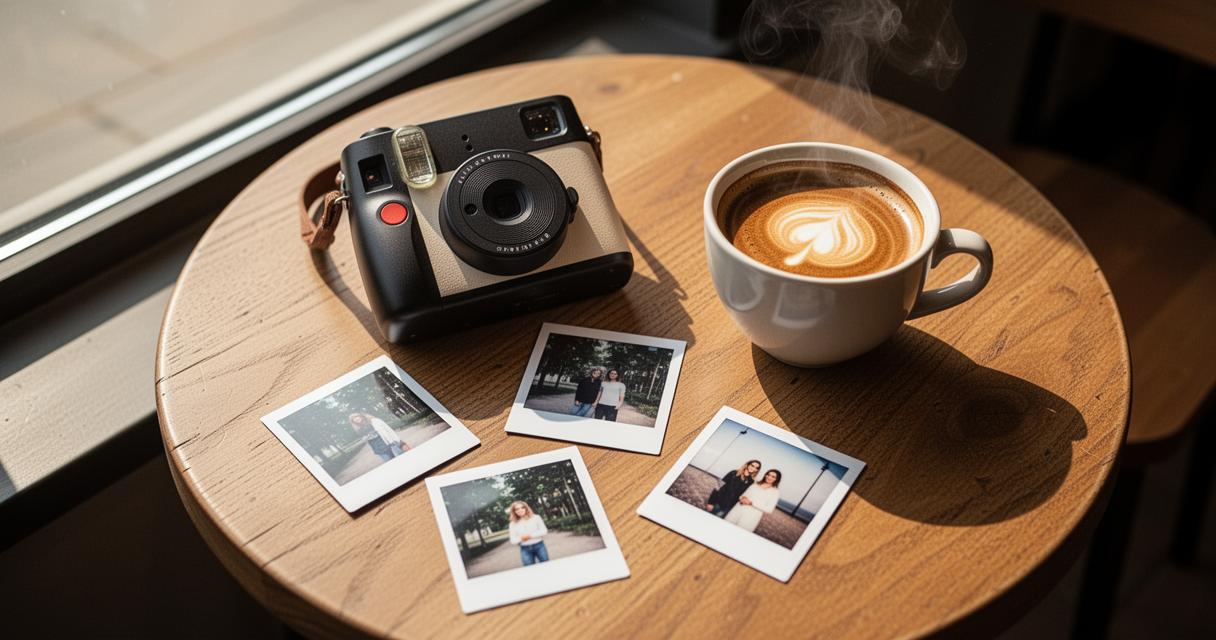
One of the most satisfying ways to showcase a collection of instant photos is through a geometric grid. The symmetry of square prints makes this approach almost effortlessly elegant. Using small, low-adhesive mounting strips or double-sided foam pads, you can affix prints directly onto a pale wall in rows of equal spacing. The key to a polished result is consistency: decide on a gap of roughly the same width between each print, and use a spirit level or a length of washi tape as a guide before committing.
For a more dynamic arrangement, consider a diamond pattern, rotating each print forty-five degrees so that the corners point upward, downward and to either side. This transforms the familiar grid into something more sculptural and unexpected. Mixing black and white prints alongside full-colour shots within the same arrangement adds tonal contrast and prevents the display from feeling visually monotonous. The entire project can be achieved without specialist tools or significant expense, making it an accessible project for any home.
Using Wooden Pegs and Fairy Lights for a Warm Vintage Vibe
If you prefer a more relaxed, bohemian aesthetic, suspending your prints from a horizontal length of twine or a thin wooden dowel using small wooden pegs creates an instantly warm atmosphere. This approach has the additional advantage of being entirely non-permanent — you can swap prints in and out without leaving any marks on the wall. Weaving a strand of warm-white fairy lights along the twine amplifies the vintage quality of the prints, casting a gentle glow that echoes the analogue spirit of the Instax SQ6 itself.
Layering several parallel rows at different heights creates depth and transforms a bare wall into a living gallery. You might intersperse the prints with small dried flowers, postcards or other flat ephemera hung from the same pegs to build a more personal narrative. The film prints, with their distinctive white borders, sit naturally within this kind of curated, handmade display, reinforcing the sense that each image has been thoughtfully chosen rather than mass-produced.
Long-term preservation and framing options
Choosing the Right Frames to Protect Your Fujifilm Prints
While adhesive and peg displays are charming and flexible, they do expose prints to dust and handling. For shots you consider truly special — a portrait, a travel memory, a moment you want to preserve for years — investing in a small frame is worthwhile. Square frames designed for instant photo formats are widely available, and many come with mounts in neutral tones that complement the white border of the print without overwhelming the image itself.
When selecting frames, opt for those with UV-protective glazing wherever possible, as exposure to direct sunlight can cause the dyes in instant film to fade over time. Positioning framed prints away from windows and radiators further extends their lifespan. A small grouping of three or five framed Instax prints, arranged asymmetrically on a shelf or sideboard, creates a refined display that works equally well in a modern or a more traditional interior.
Rotating your collection with easy-to-swap display boards
One of the genuine pleasures of shooting with an instant device like the Fujifilm Instax SQ6 is the steady accumulation of prints over time. Rather than feeling overwhelmed by a growing collection, embrace the idea of rotation. A corkboard, a magnetic board, or a pegboard mounted on a single wall can serve as a dynamic gallery that evolves with your life. Swapping out seasonal prints, replacing old shots with new favourites, or organising prints thematically by trip or occasion keeps the display feeling fresh and personally meaningful.
For those who prefer a more archival approach, a dedicated album designed specifically for square-format instant prints provides a tactile, organised way to store images that are not currently on display. Slipping prints into clear pockets preserves them from fingerprints and moisture while keeping them readily accessible whenever you want to revisit a memory or refresh your wall. Together, these display and preservation strategies ensure that every print produced during your Instax SQ6 adventures finds a fitting home — whether on show for all to see or carefully kept for quieter, personal moments of reflection.